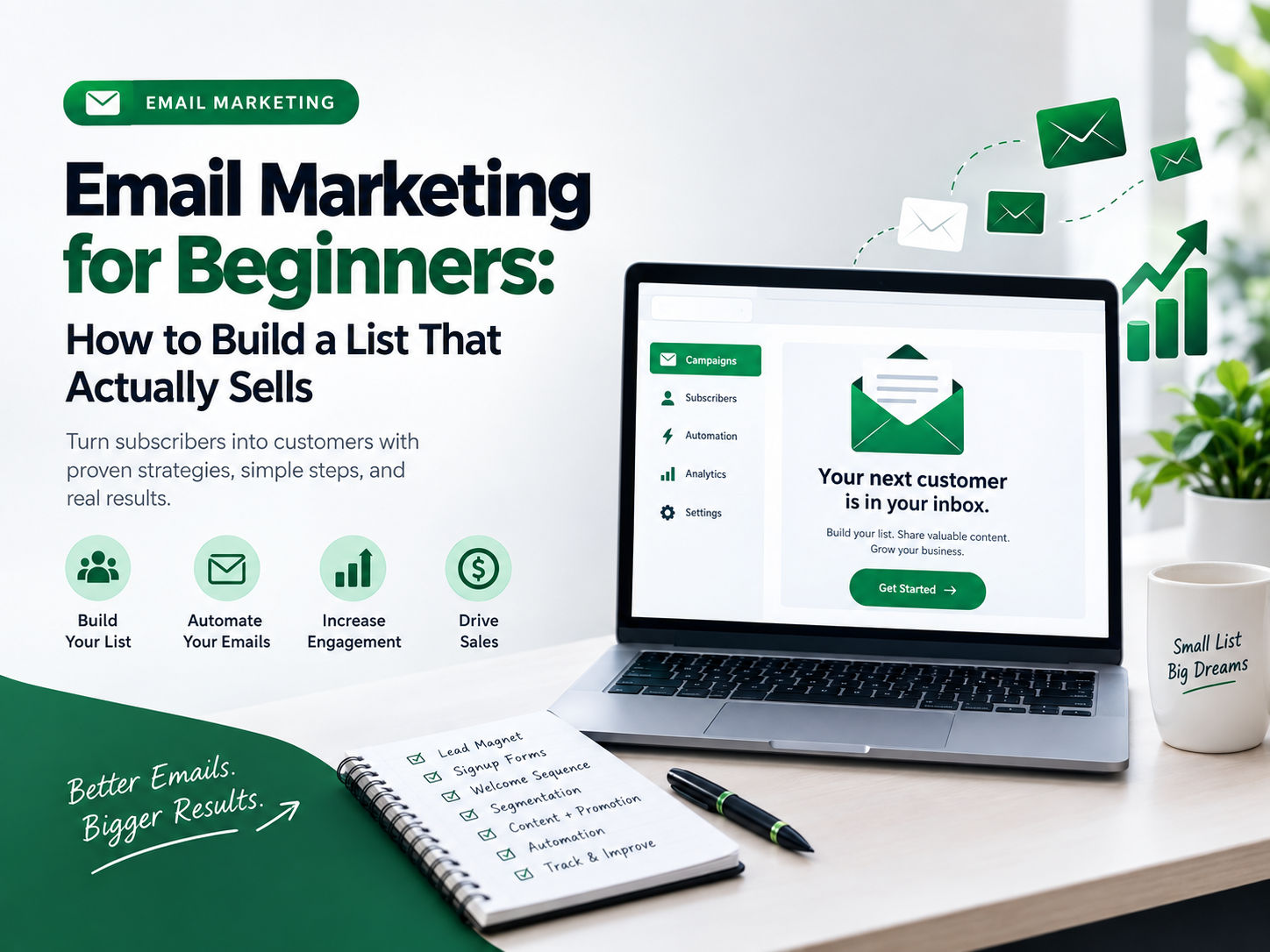
Email marketing for beginners often gets dismissed as an outdated channel compared to social media and paid ads, yet it consistently produces some of the highest returns of any marketing channel available. The difference between email and nearly every other channel is ownership — you own your list, and no algorithm decides whether your message reaches the people who signed up to hear from you.
This guide covers email marketing for beginners from the very first signup form to the campaigns that actually convert subscribers into paying customers. No vague theory — just the specific steps that turn a list of email addresses into a reliable, repeatable revenue channel that keeps producing results long after the initial setup work is done.
Why Email Still Outperforms Social Media for Direct Sales
Social platforms decide who sees your content, and that decision changes constantly based on algorithm updates outside your control. Email works differently. Once someone joins your list, every message you send lands directly in their inbox, without a platform filtering, throttling, or burying it based on engagement signals you can’t predict.
This is the core reason email marketing for beginners remains one of the highest-leverage skills to learn early. A social media following can disappear overnight if a platform changes its rules or shuts down entirely. An email list, properly maintained, remains a durable asset you fully control regardless of what happens to any single platform.
Step 1: Choose an Email Platform Built for Growth
Before writing a single email, you need a platform to manage subscribers, automate sequences, and track performance. Mailchimp remains a popular starting point for complete beginners due to its free tier and simple interface, while ConvertKit tends to suit creators and course-based businesses better with its more flexible automation and tagging system.
The specific platform matters less than actually starting. Email marketing for beginners often stalls at this decision stage, with new marketers spending weeks comparing platforms instead of publishing their first signup form. Nearly every major platform can handle the basics well enough to get started; you can always migrate to a more advanced tool once your list and strategy mature.
Step 2: Create a Lead Magnet Worth Trading an Email For
Nobody hands over their email address for nothing in return. A lead magnet — a free guide, checklist, discount code, or short course — gives visitors a clear, immediate reason to subscribe. The strongest lead magnets solve one specific, narrow problem quickly, rather than trying to cover an entire broad topic.
A common mistake in email marketing for beginners is creating a lead magnet that’s too generic to feel valuable, or too broad to actually deliver on its promise in a reasonable amount of time. A checklist that solves one specific frustration in five minutes almost always outperforms a 40-page ebook that requires a genuine commitment to read.
Step 3: Place Signup Forms Where People Actually Convert
A lead magnet only works if people actually see the signup form. Placing forms in high-visibility locations — a website header, the end of blog posts, an exit-intent popup, or a dedicated landing page — meaningfully increases conversion compared to burying a signup form in a footer nobody scrolls to.
Different placements convert at different rates depending on your traffic source and content type. Testing more than one placement, rather than assuming a single form location will work universally, is a habit worth building early in email marketing for beginners, since even small placement changes can noticeably shift signup rates.
Step 4: Build a Welcome Sequence Before You Need One
The welcome sequence — a short series of automated emails sent immediately after someone subscribes — sets the tone for the entire relationship with a new subscriber. This is often the highest-converting sequence any list will ever have, because subscriber attention and interest peak right after signup, then gradually decline the longer they go without hearing from you.
A strong welcome sequence typically introduces who you are, delivers on the lead magnet’s promise clearly, and gradually introduces your paid offers without leading with a hard sales pitch in the very first message. Building this sequence before you actually need it — rather than scrambling once subscribers start arriving with no follow-up in place — is one of the clearest markers separating organized email marketing for beginners from list-building that never converts into revenue.
Step 5: Segment Your List Instead of Sending One Message to Everyone
Not every subscriber wants the same content. Segmenting your list — by purchase history, engagement level, signup source, or expressed interest — lets you send more relevant messages to each group, which consistently produces higher open and click rates than blasting identical content to your entire list regardless of relevance.
Even basic segmentation, like separating “customers” from “never purchased,” makes a meaningful difference. Sending a discount code to someone who already bought the full-price version wastes the message and can feel tone-deaf, while the same message sent to someone who’s shown interest but never converted often produces exactly the nudge needed to complete a purchase.
Step 6: Write Subject Lines That Actually Get Opened
An email that never gets opened never gets read, no matter how well the body copy is written. Subject lines that create genuine curiosity, promise a specific benefit, or reference something timely and relevant to the subscriber consistently outperform vague, generic subject lines that give the reader no reason to prioritize opening that particular message.
The principles behind strong subject lines overlap heavily with broader copywriting fundamentals. If you want a deeper breakdown of what makes any piece of writing more persuasive, this guide on how to write marketing copy that sells covers the customer-first thinking that applies directly to email subject lines and body copy alike.
Step 7: Write Emails That Read Like a Person, Not a Company
Emails that sound like corporate announcements get skimmed and deleted. Emails that read like a message from one person to another — using “I” and “you,” sharing a genuine perspective, and avoiding overly formal language — consistently produce stronger engagement and trust over time.
This doesn’t mean abandoning professionalism, but it does mean writing the way you’d actually talk to someone rather than the way a press release gets written. Email marketing for beginners often improves significantly the moment this shift happens, since subscribers respond to a genuine voice far more than a polished but impersonal one.
Step 8: Balance Value and Promotion in Your Sending Cadence
A list that only hears from you when you’re selling something quickly learns to ignore your emails. A more sustainable approach mixes genuinely useful content — tips, insights, behind-the-scenes updates — with direct promotional messages, so subscribers have a reason to open your emails even during the stretches when you’re not actively running a sale.
There’s no single universal ratio that works for every business, but a common, reasonable starting point mirrors the content mix used across other channels: roughly two or three value-driven emails for every direct promotional one. This keeps the relationship from feeling purely transactional while still generating consistent sales opportunities.
Step 9: Use Automation to Scale Without Constant Manual Work
Automated sequences — welcome series, abandoned cart reminders, post-purchase follow-ups, re-engagement campaigns for inactive subscribers — let a small list or a solo marketer generate consistent revenue without manually sending every single message. Once built, these sequences run continuously in the background, triggered by specific subscriber actions rather than requiring ongoing manual effort.
This is one of the more overlooked advantages of email marketing for beginners compared to channels like social media, where consistent visibility requires constant new content. A well-built automation sequence, once set up correctly, continues working weeks or months after the initial setup with minimal ongoing maintenance.
Step 10: Track the Metrics That Actually Predict Revenue
Open rates and click rates matter, but they’re only useful as far as they connect to actual sales. Tracking conversion rate — the percentage of subscribers who take the desired action after opening an email — alongside revenue per email sent gives a far clearer picture of what’s actually working than surface-level engagement numbers alone.
Most email platforms provide this data natively, and reviewing it regularly reveals patterns worth acting on: certain subject line styles that consistently perform better, specific send times that produce higher engagement, or particular types of content that reliably drive more clicks through to your website or offers. Industry benchmarks from sources like HubSpot can also provide useful context for whether your specific open and click rates are competitive within your industry.
Step 11: Stay Compliant With Email Marketing Laws
Email marketing for beginners isn’t just about writing good copy — it also involves following legal requirements that protect subscribers and your sender reputation. In the United States, the CAN-SPAM Act requires clear sender identification, an accurate subject line, and a working unsubscribe link in every commercial email, with similar requirements existing in other regions like the EU’s GDPR framework.
Beyond the legal requirement, honoring unsubscribe requests promptly and avoiding purchased or scraped email lists protects your sender reputation with email providers. A list built entirely from genuine, permission-based signups consistently performs better and avoids the deliverability problems that come from sending to people who never actually asked to hear from you.
Step 12: Grow Your List Continuously, Not Just at Launch
A common pattern in email marketing for beginners is treating list building as a one-time setup task rather than an ongoing priority. A signup form created once and then forgotten produces a slow trickle of subscribers at best, while consistent, active promotion of your lead magnet across every available channel produces meaningfully faster growth.
This means mentioning your lead magnet in social media posts, referencing it at the end of blog content, and potentially running small paid campaigns specifically designed to drive signups once you understand your subscriber value well enough to justify the spend. Treating list growth as an ongoing function of the business, rather than a task that gets completed once and left alone, is one of the clearest differences between email lists that compound steadily over time and those that stagnate shortly after launch.
Cross-promotion with other creators or businesses serving a similar but non-competing audience is another underused growth channel. A simple newsletter swap — where two email lists each recommend the other to their subscribers — can produce a meaningful batch of new, relevant signups without any advertising spend, provided both audiences are genuinely well-matched to each other’s content and offers.
How Email Marketing Connects to Your Broader Strategy
Email doesn’t work in isolation from the rest of your marketing. It’s one piece of a larger system that should reinforce your other channels rather than compete with them for attention. If you’re building out a complete strategy that includes email alongside SEO, social media, and paid channels, this guide on building a digital marketing plan from scratch covers how each channel fits together into one coordinated system.
Email is also one of the most valuable assets for anyone building income through content or partnerships. If you’re interested in monetizing an audience through product recommendations, this guide to affiliate marketing for beginners covers how a genuinely engaged email list can become one of the highest-converting channels for affiliate commissions, since subscribers already trust your recommendations more than a cold audience would.
Step 13: Test Instead of Guessing What Works
Even experienced email marketers can’t reliably predict which subject line, send time, or call-to-action wording will perform best without actually testing it against real subscriber behavior. A/B testing — sending two versions of an email to small segments of your list, then sending the better-performing version to everyone else — replaces internal opinion with actual data.
This habit matters more the larger a list grows, since even small percentage improvements in open or click rates translate into meaningfully more revenue at scale. Email marketing for beginners benefits from building this testing habit early, even with a small list, since the skill of forming a hypothesis, testing it, and acting on the result compounds in value as the list and sending frequency grow over time.
Common elements worth testing include subject lines, the specific wording of a call to action, send time and day of the week, and even the overall length of an email. Testing one variable at a time, rather than changing multiple elements simultaneously, makes it possible to actually attribute a performance change to the specific thing you tested rather than guessing which of several changes caused the difference.
Common Mistakes That Slow Down Email Marketing Results
Sending too infrequently. Subscribers forget why they signed up if too much time passes between emails. Regular, predictable sending — even just weekly — keeps your list warm and engaged.
Never segmenting the list. Treating every subscriber identically wastes the opportunity to send more relevant, higher-converting messages to specific groups based on their behavior and interests.
Writing overly formal, corporate copy. Emails that sound like a press release rather than a genuine message from a real person consistently underperform more conversational, personal writing.
Ignoring mobile formatting. A large percentage of emails are opened on a phone. Long paragraphs, tiny text, and buttons too small to tap easily all hurt engagement and conversion on mobile devices specifically.
Buying email lists instead of building them organically. Purchased lists convert poorly, damage sender reputation, and often violate the terms of service of most reputable email platforms, making organic list growth the only sustainable long-term approach.
Frequently Asked Questions
How long does it take to build a profitable email list from scratch?
Most beginners see meaningful results within three to six months of consistent list-building and regular sending, though the exact timeline depends heavily on traffic sources and how compelling the lead magnet is.
Do I need a large email list to make money from email marketing for beginners?
No. A smaller, highly engaged list of a few hundred genuinely interested subscribers often outperforms a much larger, disengaged list when it comes to actual revenue generated per email sent.
How often should beginners send emails?
Weekly sending is a reasonable, sustainable starting point for most beginners, balancing consistency with avoiding subscriber fatigue. Some niches and audiences support more frequent sending once trust is established.
What’s the fastest way to grow an email list as a complete beginner?
Creating a specific, genuinely useful lead magnet and placing signup forms prominently across high-traffic content tends to produce faster growth than waiting for organic, passive signups without any dedicated offer.
Can email marketing work without a website?
It’s possible using landing page tools built into most email platforms, but a website generally provides more consistent, long-term traffic sources for list growth compared to relying solely on social media or paid traffic pointed at a standalone landing page.
Should beginners focus on list size or list engagement first?
Engagement should come first. A smaller, genuinely engaged list is both more profitable and easier to grow further, since engaged subscribers are more likely to share your content and refer new signups than a large but disinterested list ever would, and email providers also reward consistently high engagement with better inbox placement over time.
Is it worth paying for an email platform as a complete beginner?
Most platforms offer a free tier that’s more than sufficient for beginners with a small list, making the actual cost decision less important early on than simply starting to build the list and testing what resonates with subscribers.
How do I avoid my emails landing in spam folders?
Consistent sending, honoring unsubscribe requests promptly, avoiding purchased lists, and using a reputable email platform with proper authentication all significantly reduce the odds of landing in spam folders compared to sporadic sending from a poorly configured or newly created sending domain. Warming up a new sending domain gradually, rather than sending a large volume immediately, also helps establish a trustworthy sender reputation with major email providers.
Final Thoughts
Email marketing for beginners succeeds when the list is treated as a genuine relationship rather than a broadcast channel for constant selling. A clear lead magnet, a strong welcome sequence, thoughtful segmentation, and a healthy balance between value and promotion all work together to build the kind of trust that eventually converts into consistent, reliable revenue.
The businesses that get the most value from email aren’t the ones with the largest lists — they’re the ones that consistently show up with genuinely useful content, respect their subscribers’ inbox, and make it easy and natural for interested readers to become paying customers when they’re ready. Mastering email marketing for beginners isn’t about learning every advanced automation trick available — it’s about applying these fundamentals consistently long enough for a small list to grow into a genuinely valuable, revenue-generating asset.