


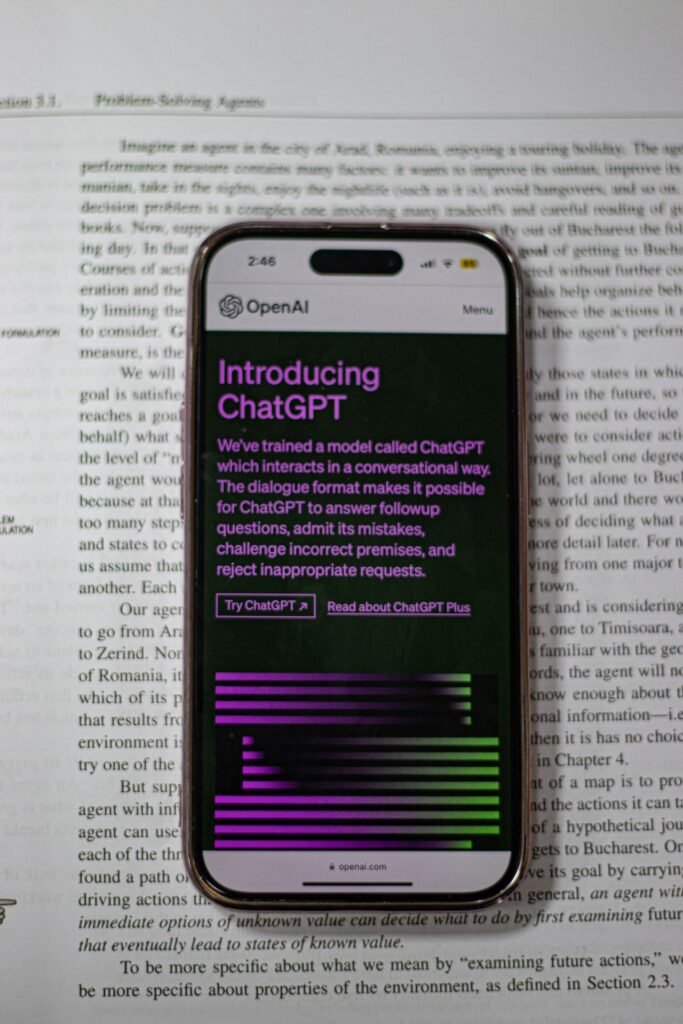
ChatGPT Ads in 2026 represent the single biggest new advertising opportunity in digital marketing history — and businesses that understand exactly how to advertise on ChatGPT right now are positioning themselves years ahead of competitors who are still treating this as a niche experiment rather than a core advertising channel. On May 5, 2026, OpenAI made ChatGPT Ads accessible to any business through a self-serve Ads Manager with no minimum spend required — opening up direct access to a platform that processes 2.5 billion daily prompts to advertisers of every size, not just enterprise brands with massive marketing budgets.
This complete guide will show you exactly how ChatGPT Ads work in 2026, how to set up your first campaign, how targeting and bidding function on this entirely new advertising model, and how to advertise on ChatGPT effectively to reach the platform’s massive and rapidly growing daily user base before the competition catches up.
To understand how ChatGPT Ads fit into a broader AI-powered marketing strategy, read our complete guide on AI-Powered SEO Strategies for Global Business Growth in 2026.
What Are ChatGPT Ads and Why Do They Matter in 2026?
ChatGPT Ads are paid advertisements that appear in clearly labeled boxes at the bottom of AI-generated responses inside the ChatGPT interface. Unlike traditional search advertising, these ads do not influence the actual answer ChatGPT provides — they appear as a separate, clearly marked section after the genuine AI response, preserving the trust and accuracy that makes ChatGPT valuable to its users while still creating a powerful new advertising surface for businesses.
The scale of opportunity behind ChatGPT Ads in 2026 is extraordinary. ChatGPT processes 2.5 billion daily prompts — meaning advertisers now have access to one of the largest concentrated audiences of high-intent, actively engaged users anywhere on the internet. OpenAI’s advertising platform launched its first ad placements in a limited beta on February 9, 2026, hit $100 million in annualized revenue within the first six weeks, and is now projecting $2.5 billion in ad revenue for 2026 alone — figures that demonstrate just how quickly advertisers are recognizing the value of this new channel.
According to HubSpot’s Marketing Statistics, businesses that adopt new advertising channels early consistently achieve lower acquisition costs and higher engagement rates than those who wait until a channel becomes saturated with competition. ChatGPT Ads represent exactly this kind of early-mover opportunity — a massive, engaged audience with advertising competition that remains relatively low compared to mature channels like Google Search and Meta.
How ChatGPT Ads Work: Understanding the New Advertising Model
Understanding the mechanics of ChatGPT Ads is essential before launching your first campaign, because this advertising model operates fundamentally differently from anything currently in your existing marketing stack — including Google Ads and Meta Ads.
Contextual Targeting Instead of Traditional Keywords
The most important distinction in how ChatGPT Ads function is the targeting methodology. Rather than bidding on specific keywords as you would with Google Ads, ChatGPT advertising targeting is based on the current conversation topic, the user’s past chat history, and their prior ad interactions. This means your ad eligibility is determined by the actual context and intent expressed in a user’s conversation with ChatGPT — often a more precise and high-intent signal than a single keyword search query.
This contextual approach to ChatGPT Ads targeting means advertisers need to think differently about campaign structure. Instead of building keyword lists, you need to identify the specific conversation topics, questions, and use cases where your product or service would be a genuinely relevant solution — then structure your ad campaigns around those conversational contexts.
CPC and CPM Bidding Models for ChatGPT Ads
OpenAI added cost-per-click bidding to ChatGPT Ads in May 2026, alongside the existing cost-per-mille (CPM) model — a critical addition for performance marketers who need to optimize toward actual conversions and clicks rather than just impressions. This dual bidding structure allows advertisers to choose the model that best fits their campaign goals: CPM for brand awareness campaigns seeking maximum visibility, and CPC for performance campaigns focused on driving traffic and conversions.
To understand how AI tools accelerate the content creation needed to support advertising campaigns like ChatGPT Ads, read our guide on Top 10 AI Tools That Will Save You Hours Every Day in 2026.
💡 Pro Tip: Start your first ChatGPT Ads campaign with CPM bidding to gather initial data on which contextual placements generate the strongest engagement for your specific product or service. Once you have collected sufficient performance data — typically after the first 1,000 to 2,000 impressions — switch to CPC bidding to optimize specifically for the clicks and conversions that matter most to your business goals.
How to Set Up Your First ChatGPT Ads Campaign in 2026
Setting up your first ChatGPT Ads campaign through OpenAI’s self-serve Ads Manager is more accessible than most advertisers expect, since the platform was specifically designed to allow any U.S. business to begin advertising without a minimum spend requirement or lengthy approval process.
Step 1: Access the ChatGPT Ads Manager
The self-serve ChatGPT Ads Manager launched by OpenAI on May 5, 2026 allows any U.S. business to create an advertiser account, set up billing, and begin building campaigns without needing a dedicated account representative or enterprise-level contract — a significant departure from how most major platforms historically rolled out new advertising products to only their largest existing clients first.
Step 2: Define Your Conversational Targeting Strategy
Because ChatGPT Ads targeting operates on conversation context rather than traditional keywords, the most important preparation step before launching a campaign is mapping out the specific types of conversations where your product or service represents a genuinely useful solution. Consider the questions, problems, and research conversations your ideal customers are likely having with ChatGPT — a software company might target conversations about workflow efficiency or specific technical problems their product solves, while a consumer brand might target conversations about product comparisons or buying decisions within their category.
Step 3: Create Ad Creative That Fits the ChatGPT Format
Because ChatGPT Ads appear in clearly labeled boxes at the bottom of AI responses, your ad creative needs to be concise, immediately clear about the value you offer, and designed to stand out as a distinct, trustworthy unit separate from the AI-generated answer above it. Unlike display advertising that relies heavily on visual design, ChatGPT Ads creative succeeds through clear, benefit-focused copy that respects the conversational context the user was just engaged in.
To understand how AI writing tools can help you craft compelling ad copy for this new channel, read our guide on How to Use ChatGPT to Make Money Online Fast in 2026.
Step 4: Set Your Budget and Bidding Strategy
Start your first ChatGPT Ads campaign with a conservative daily budget — similar to the testing approach recommended for any new advertising platform — and allocate that budget across both CPM and CPC bidding to gather comparative performance data. OpenAI’s no-minimum-spend policy makes this kind of cautious, data-driven testing approach genuinely accessible to businesses of any size, removing the financial risk that historically made testing new advertising channels prohibitive for smaller advertisers.
💡 Pro Tip: Allocate no more than 10 to 15 percent of your total monthly advertising budget to ChatGPT Ads during your first 60 days on the platform. This testing-phase budget allocation allows you to gather meaningful performance data and identify which conversational contexts drive the strongest results for your specific business, without over-committing budget to a channel you are still learning to optimize effectively.
Why Advertise on ChatGPT in 2026: The Strategic Case
Understanding why advertising on ChatGPT deserves a place in your 2026 marketing strategy requires looking beyond the raw user numbers to the qualitative shift happening in how people discover and research products and services.
The Shift From Search Clicks to AI Conversations
The broader context behind the rise of ChatGPT Ads is a fundamental change in consumer research behavior. Google’s May 2026 Core Update has made this shift undeniable — research from Discovered Labs shows that top-10 Google rankers accounted for 76% of AI Overview citations in mid-2025, but that share had dropped to roughly 38% by early 2026. Strong traditional search rankings and AI citation visibility have officially decoupled, meaning businesses can no longer assume that ranking well on Google guarantees visibility in the AI-powered research conversations where customers increasingly spend their time before making purchase decisions.
This shift makes ChatGPT Ads a strategically essential channel rather than merely an interesting experiment. If your potential customers are increasingly researching solutions through conversational AI rather than traditional search clicks, advertising directly inside that conversational experience becomes one of the only ways to maintain visibility during the critical research and decision-making phase of the buyer journey.
Lower Competition Than Established Advertising Channels
Meta is projected to generate $243.46 billion in global ad revenue in 2026, edging past Google’s $239.54 billion for the first time in digital advertising history — a clear signal of just how saturated and competitive the established advertising platforms have become. Against this backdrop, ChatGPT Ads at a projected $2.5 billion in 2026 revenue represents a comparatively nascent advertising market with significantly less competition for the same advertiser attention and budget.
Early advertisers on any platform historically benefit from lower costs per click, less competitive bidding environments, and the opportunity to establish brand presence before the channel matures and advertising costs rise to match the more saturated channels. Businesses that begin learning how to advertise on ChatGPT now are positioning themselves to capture this early-mover advantage before ChatGPT Ads costs inevitably rise as more advertisers recognize the platform’s value.
To see how this advertising opportunity connects to broader digital marketing strategies for business growth, read our guide on AI-Powered SEO Strategies for Global Business Growth in 2026.
💡 Pro Tip: Document your ChatGPT Ads performance benchmarks carefully during this early-adoption phase — cost per click, conversion rate, and audience engagement metrics. As more advertisers enter the platform and competition increases, these early benchmarks will help you recognize when the channel’s economics begin shifting and adjust your strategy and budget allocation accordingly.
How ChatGPT Ads Compare to Other Advertising Channels in 2026
Understanding how ChatGPT Ads fit alongside your existing advertising channels helps clarify where this new platform delivers the strongest return on investment within your broader marketing mix.
ChatGPT Ads vs Google Search Ads
Google Search Ads target explicit keyword queries with clear commercial intent, while ChatGPT Ads target the broader conversational context of a user’s research and problem-solving process — often capturing potential customers earlier in their decision journey, before they have formulated a specific search query. This earlier-stage visibility makes ChatGPT Ads particularly valuable for businesses with longer consideration cycles or complex products that benefit from being introduced during the research and education phase rather than only at the point of explicit search intent.
ChatGPT Ads vs Meta Ads
Meta Ads excel at interest and behavior-based targeting across a visually-driven social platform, while ChatGPT Ads reach users in a fundamentally different mental state — actively engaged in problem-solving, research, or learning conversations rather than passive social browsing. This distinction means ChatGPT Ads often reach audiences with higher immediate intent and engagement, even though the overall platform audience size remains smaller than Meta’s combined properties.
To understand how AI-powered marketing tools support performance across all advertising channels including ChatGPT Ads, read our complete guide on AI-Powered SEO Strategies for Global Business Growth in 2026.
Building an Integrated Strategy Across All Channels
The most effective approach to ChatGPT Ads in 2026 treats this new channel as a complement to your existing advertising mix rather than a replacement for proven channels like Google Search and Meta. Businesses that integrate ChatGPT Ads alongside their established advertising strategy capture the conversational research phase of the customer journey while maintaining their presence across the search and social channels that continue driving significant business results.
How Agentic Advertising Is Changing What Skills Matter for ChatGPT Ads
Google Marketing Live recently formalized an agentic advertising model that fundamentally changes which skills matter most for paid media professionals — a shift that directly applies to how marketers should approach ChatGPT Ads and the broader AI advertising ecosystem emerging in 2026.
From Manual Optimization to Strategic Direction
Agentic AI in advertising means autonomous AI agents increasingly handle complex tasks like adjusting bids, generating ad variations, and reallocating budget across campaigns without direct human intervention for every decision. For ChatGPT Ads specifically, this means the marketer’s role is shifting from manually optimizing every campaign element to strategically directing the overall advertising approach — defining target audiences, conversation contexts, and business goals while AI systems handle increasingly sophisticated tactical execution.
This shift does not diminish the importance of marketing skill — it elevates the importance of strategic thinking, creative direction, and genuine understanding of customer psychology over manual technical execution. Marketers who understand how to direct AI advertising systems effectively, including ChatGPT Ads campaigns, will significantly outperform those still approaching advertising with purely manual, execution-focused skill sets.
To understand how to develop the AI-directed marketing skills that matter most in 2026, read our complete guide on How to Use AI to Write a Resume That Gets You Hired in 2026.
💡 Pro Tip: Invest time in understanding the underlying business outcomes you want ChatGPT Ads to drive — qualified leads, direct sales, brand awareness, or customer education — rather than focusing primarily on the tactical mechanics of campaign setup. As agentic AI handles increasing amounts of tactical optimization automatically, the marketers who provide the clearest strategic direction will achieve the strongest results from this and every emerging AI advertising platform.
Common Mistakes to Avoid When Advertising on ChatGPT in 2026
Understanding the most common mistakes early advertisers are making with ChatGPT Ads helps you avoid wasted budget and accelerate your path to genuinely effective campaigns on this new platform.
Mistake 1: Applying Traditional Keyword Thinking to Contextual Targeting
The most common mistake advertisers make when learning how to advertise on ChatGPT is attempting to apply traditional keyword-based targeting logic to a fundamentally contextual targeting system. ChatGPT Ads reward advertisers who think in terms of conversation topics, user intent, and problem-solving contexts rather than discrete keyword lists — a mental shift that takes deliberate effort for marketers experienced primarily with traditional search advertising.
Mistake 2: Ignoring the Conversational Context of Ad Placement
Because ChatGPT Ads appear immediately after a genuine, helpful AI response, ad creative that feels jarring, irrelevant, or overly aggressive relative to the preceding conversation performs poorly and risks damaging user trust in your brand. Successful ChatGPT Ads respect and build naturally on the conversational context rather than interrupting it with disconnected promotional messaging.
Mistake 3: Allocating Too Much Budget Before Establishing Performance Benchmarks
Given how new and rapidly evolving ChatGPT Ads remains as an advertising platform in 2026, committing large advertising budgets before establishing clear performance benchmarks through smaller test campaigns is a significant and avoidable risk. The platform’s no-minimum-spend self-serve model specifically enables a cautious, data-driven testing approach that smart advertisers should take full advantage of.
💡 Pro Tip: Run your initial ChatGPT Ads campaigns with at least three distinct conversational targeting contexts simultaneously, with equal budget allocation across each. This parallel testing approach reveals which conversation types and user contexts generate the strongest results for your specific business faster than sequential testing, while still respecting the cautious budget approach appropriate for any genuinely new advertising platform.
The Future of ChatGPT Ads: What to Expect Beyond 2026
Understanding where ChatGPT Ads is likely headed beyond its initial 2026 launch helps advertisers make strategic decisions about how much to invest in building expertise on this platform now versus waiting for further maturation.
Projected Growth and Increasing Competition
With ChatGPT Ads already projecting $2.5 billion in revenue for 2026 after reaching $100 million in annualized revenue within just six weeks of limited beta launch, the trajectory clearly points toward continued rapid growth and increasing advertiser competition throughout the remainder of the year and into 2027. This growth pattern mirrors the early trajectories of other advertising platforms that eventually became major channels — suggesting that advertisers who establish expertise and performance data now will be significantly better positioned than those who wait until the platform reaches full maturity and competition intensifies.
Expanding Targeting and Creative Capabilities
OpenAI’s addition of CPC bidding alongside the existing CPM model in May 2026 signals a platform actively expanding its advertising capabilities to match the sophistication advertisers expect from mature channels. Businesses should expect ChatGPT Ads to continue adding targeting refinements, creative format options, and performance measurement capabilities throughout 2026 as OpenAI builds out the advertising infrastructure to match the platform’s massive 2.5 billion daily prompt scale.
To stay ahead of these evolving advertising opportunities and the broader AI marketing landscape, read our complete guide on The Complete Guide to Starting a Business with Low Investment for low-cost ways to test emerging advertising channels like ChatGPT Ads.
FAQ: ChatGPT Ads in 2026
What are ChatGPT Ads and how do they work in 2026?
ChatGPT Ads are paid advertisements that appear in clearly labeled boxes at the bottom of AI-generated responses inside ChatGPT. They do not influence the actual answer content. Targeting is contextual, based on conversation topic, chat history, and prior ad interactions rather than traditional keywords, making this a fundamentally different advertising model than Google Search Ads.
How much does it cost to advertise on ChatGPT in 2026?
OpenAI’s self-serve ChatGPT Ads Manager has no minimum spend requirement, making the platform accessible to businesses of any budget size. Advertisers can choose between cost-per-click (CPC) and cost-per-mille (CPM) bidding models depending on whether their campaign goals prioritize conversions or brand impressions.
Who can advertise on ChatGPT in 2026?
As of May 5, 2026, any U.S. business can access OpenAI’s self-serve ChatGPT Ads Manager and begin creating campaigns without needing enterprise-level contracts or dedicated account representatives — a significant departure from how major platforms have historically rolled out advertising access only to their largest clients first.
How many daily users does ChatGPT have for advertisers to reach in 2026?
ChatGPT processes 2.5 billion daily prompts in 2026, representing one of the largest concentrated audiences of actively engaged, high-intent users available to advertisers anywhere on the internet. This massive scale is a primary driver behind ChatGPT Ads reaching $100 million in annualized revenue within just six weeks of limited beta launch.
Should my business start advertising on ChatGPT now or wait in 2026?
Starting with ChatGPT Ads now offers significant early-mover advantages — lower competition for advertiser attention, the opportunity to establish performance benchmarks before the channel matures, and access to a massive engaged audience before advertising costs inevitably rise as more competitors recognize the platform’s value. Businesses should begin testing with conservative budgets to gather data while the channel remains comparatively accessible.
Final Thoughts: ChatGPT Ads in 2026
ChatGPT Ads represent one of the most significant new advertising opportunities to emerge in digital marketing in years — combining a massive, highly engaged audience of 2.5 billion daily prompts with a genuinely novel contextual targeting model that captures customers during their research and decision-making process rather than only at the point of explicit search intent.
The businesses that will benefit most from ChatGPT Ads in 2026 and beyond are not necessarily those with the largest advertising budgets — they are the ones willing to learn this new advertising model now, test thoughtfully with the platform’s accessible no-minimum-spend structure, and build genuine expertise in contextual targeting before competition intensifies and costs rise to match more saturated advertising channels.
Start by accessing OpenAI’s self-serve Ads Manager, mapping out the specific conversational contexts where your product or service provides genuine value, and launching a conservative first campaign to begin gathering the performance data that will inform your broader ChatGPT advertising strategy throughout the rest of 2026.
Open the ChatGPT Ads Manager today, define your first conversational targeting strategy, and start reaching the 2.5 billion daily users who are already having the conversations your business needs to be part of.